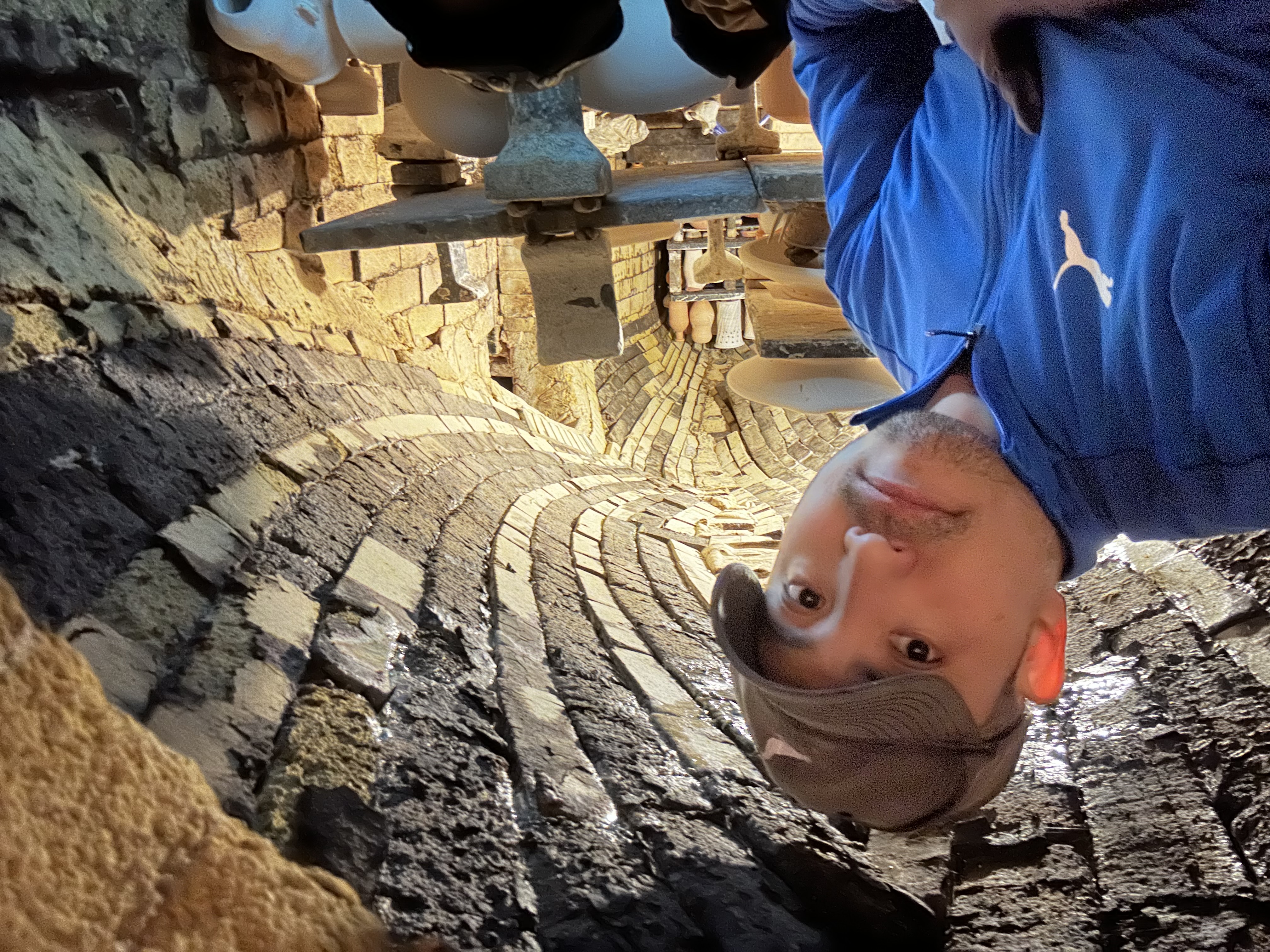
TL;DR — I spent 25 years in computer science and built a lot of apps. Today I am challenging myself to become a ceramicist at Long Island University while I explore my own style.
I have worked in ceramics since 2021, beginning with hand building and wheel throwing under Johnna Woods at LIU Brooklyn, then intermediate wheel work with Min Choi at Clay Space Brooklyn. I am now enrolled in BFA Fine Arts at LIU Post, where Frank Olt is my instructor at the Craft Center — my primary studio, where I work evenings and weekends.
After high school in Tokyo, I continued my education in the United States, earning a B.S. and M.S. in Computer Science at Long Island University, where I later taught as an adjunct. I co-founded ObjectGraph LLC, returned to graduate school in Earth & Environmental Science, and taught "Mobile GIS Programming." My more recent study spans machine learning and quantum computing.
I am a multi-faceted ceramic artist, working across 3-D printing and wood firing, exploring core aesthetic and tactile experiences.
My work explores the relationship between place, material, transformation, and information through ceramics. Whether built by hand or produced through digital fabrication, my work investigates how invisible forces—fire, geology, and data—can shape physical form. I am interested in allowing natural processes and systematic structures to become collaborators in the making of each piece.
My practice currently consists of three ongoing series: Kimono Saggar, Momoke, and 3-D Data to Cup.
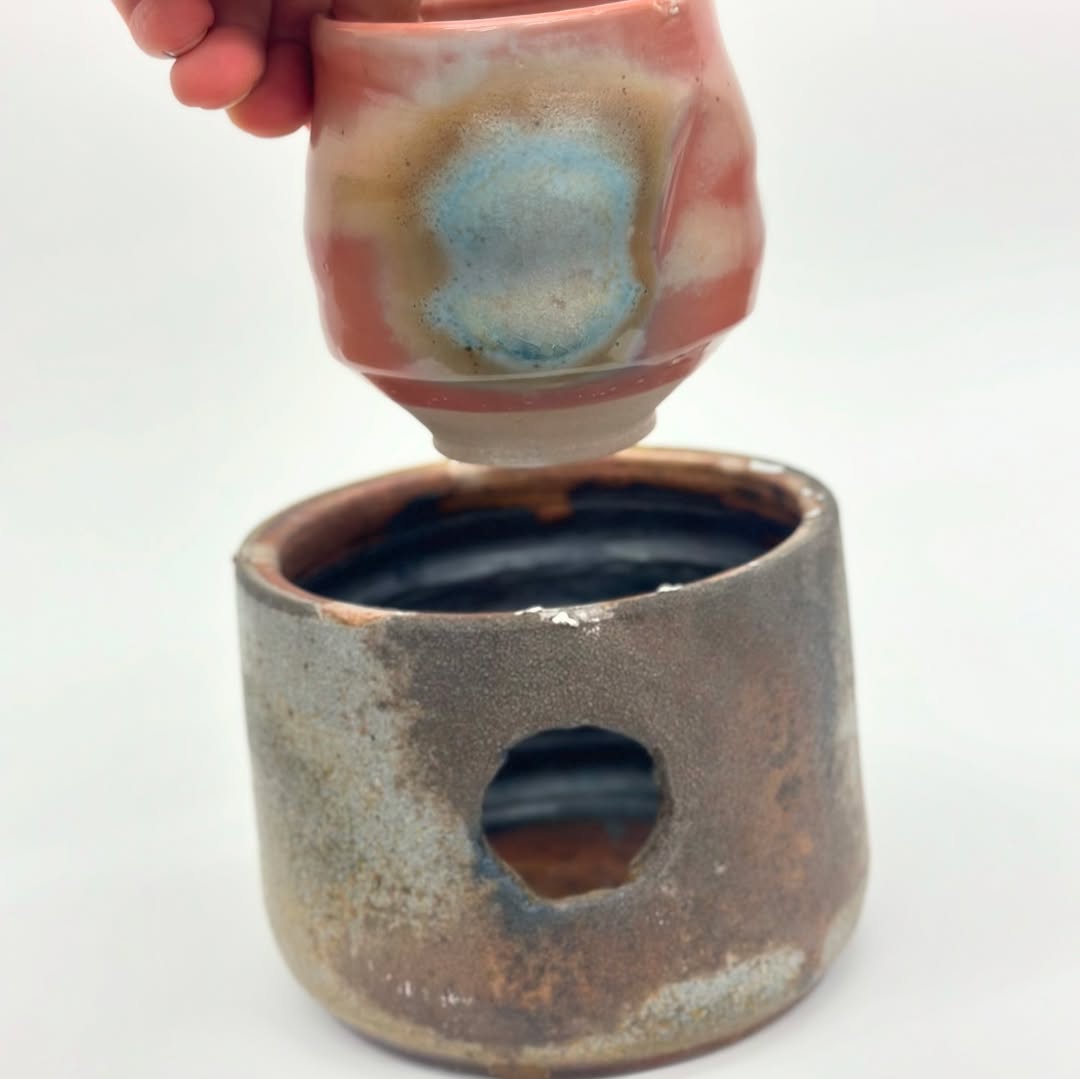
The Kimono Saggar series reimagines the traditional ceramic saggar. Historically, saggars protected pots from wood ash, but I modify them to do the opposite. By introducing carefully designed openings, I allow flame, ash, and fumed oxides to enter in controlled ways, creating a micro-atmosphere around each vessel. If wood firing is painting with flame, I think of these customized saggars as stencils that guide the movement of fire. Each container becomes both a protective shell and a drawing tool, allowing natural ash deposits, flashing, and vapor to produce patterns that cannot be achieved with glaze alone. Rather than replacing the unpredictability of wood firing, the Kimono Saggar creates a dialogue between control and chance.
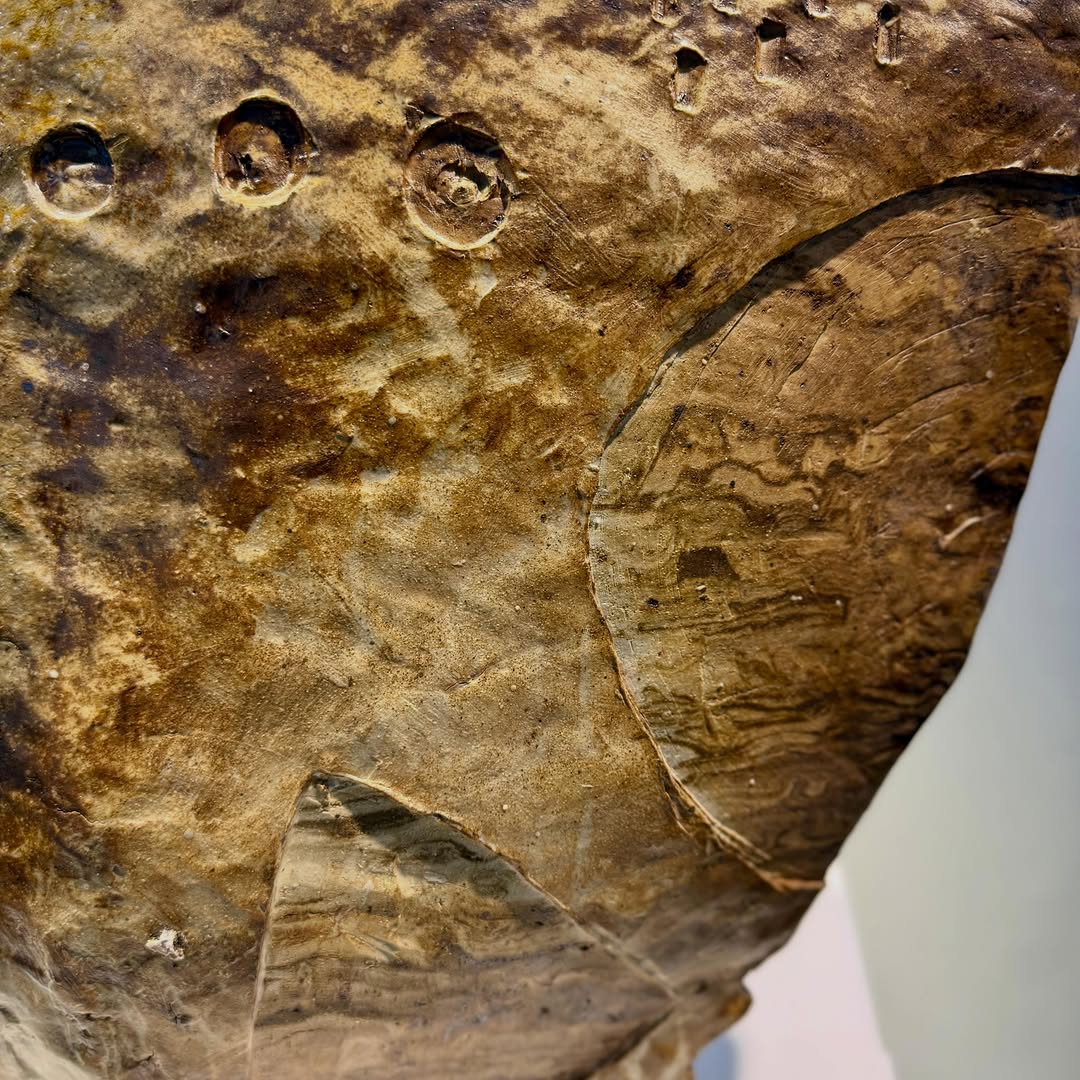
The Momoke series begins with locally excavated wild clay collected from the landscapes where the finished work will eventually return through firing. In this way, each piece completes a cycle: the material is removed from a place, transformed by fire, and carries the memory of that landscape within its surface. The Japanese word momoke describes something becoming softly fuzzy or gently worn, a quality that reflects my fascination with revealing warmth through subtraction rather than addition.
These works are built using nerikomi, layering different clays to create sediment-like formations that resemble geological strata. During the final stages, I carve away the surface using shinogi techniques, often using industrial objects such as steel pipe edges, saw blades, and chisels instead of traditional pottery tools. The geometric marks left by these manufactured tools deliberately contrast with the organic flow of the clay layers beneath them. This tension between natural formation and human intervention, between ancient geological time and contemporary industrial language, is central to the series.
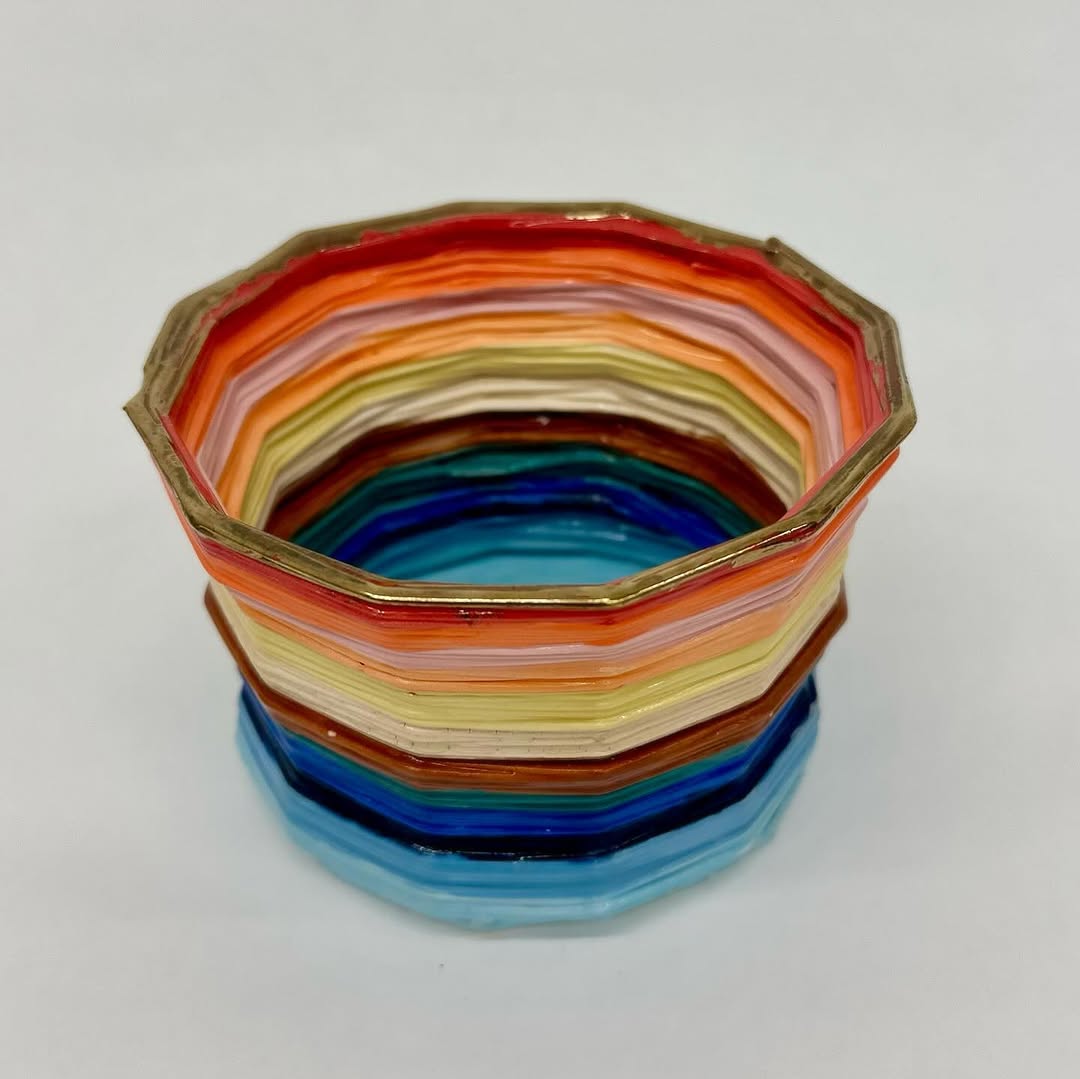
In 3-D Print Data to Cup — Data Speaks Its Own Form, I translate historical, environmental, and personal datasets into sculptural language through 3D-printed ceramics. Each vessel is generated directly from numerical values, allowing algorithms to determine the form rather than using data merely as inspiration. The spirals emerge from diverse sources, including global temperature records, historical trade data, personal health metrics, energy consumption, and even the temperature fluctuations recorded during an anagama firing. These works transform information into physical presence, merging computational precision with the tactile qualities of clay. By giving data a tangible form, I invite viewers to consider how information can preserve memory, reveal hidden narratives, and become an enduring material for storytelling.
Across all three series, I seek to expand the language of contemporary ceramics by bringing together traditional wood-firing, hand-built processes, and digital fabrication.
 Kiichi Takeuchi